
Bullion traders said subdued demand at current levels and a weak global trend mainly pulled down both gold and silver prices.

Investors sought to book profits at attractive valuations after recent run up in last few trading sessions.

'With the current situation in the global job market, students come back with an added burden of educational loans.'
The US currency weakened against major Asian currencies in global markets which lifted the rupee sentiment

The rupee on Tuesday recovered from its two-week low to end steady at 66.60 against the American currency, inching up by a paisa on the back of mild dollar selling.

After a technology upgrade, the Multi Commodity Exchange of India (MCX) appears poised for an improvement in volumes. The premier commodity and forex exchange reported a loss of Rs 19.1 crore in the July-September quarter (second quarter, or Q2) of 2023-24 (FY24). This was attributed to higher software charges payable under an extended service agreement with 63 moons technologies and a one-off cost towards core guaranteed funds (CGF).

The markets had touched their highest levels in a month.

Shares of most of the Adani group firms ended lower on Monday, with the group companies' combined mcap witnessing a sharp fall of Rs 9.5 lakh crore after US-based short-seller Hindenburg Research's adverse report.

Record equity divestment by the Reliance Group in its telecom and retail businesses garnering around $23 billion revved up the deal street in 2020, which otherwise would have gone down as one of the dullest on record, and dealmakers are seeing sunnier days in 2021 given the large scope for consolidation in a slew of sectors ravaged by the pandemic. With Jio Platforms alone garnering over $16 billion (Rs 1,18,318 crore) by selling 25.24 per cent stake and Reliance Retail notching up $6.4 billion (Rs 47,265 crore) by divesting around 9 per cent shareholding, the deal street signed off with $85 billion in the deal kitty across 1,270 transactions. This is higher by about 10 per cent over 2019. What is significant is that over a third of the total deal value came from Reliance transactions, say investment bankers.
A weak US dollar in overseas markets was the main reason for the rupee's rise even as losses in domestic stocks and some fag-end dollar demand from importers prevented further gains

The Rupee is seen strengthening against the dollar.

The NSE Nifty settled at 10,234.65, down 225.45 points, or 2.16 per cent.
Snapping its 3-day winning spree against the American currency, the rupee on Wednesday dropped by 21 paise to end at 66.64 on fag-end dollar demand from banks and importers despite a sharp rally in domestic equities.
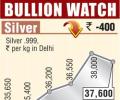
Silver also traded lower by Rs 400 at Rs 37,600 per kg.

Rupee hits 2-month low against dollar on US rate hike fears.

The rupee depreciated 31 paise to an all-time low of 80.15 against the US dollar in early trade on Monday tracking the strength of the American currency and firm crude oil prices. At the interbank foreign exchange, the rupee opened at 80.10 against the dollar, then lost ground to quote at 80.15, registering a fall of 31 paise from the last close. On Friday, the rupee closed at 79.84 against the dollar.
At lower levels, a supportive buying in dollar forced rupee to depreciate since opening trade

The rupee has gained by 21 paise or 0.31 per cent in last two days

Increased demand for the American unit from importers weighed on the rupee

The rupee on Tuesday gained 14 paise to close at 61.88 against the dollar.
A firming trend in domestic stock markets, however, capped the rupee fall to some extent


The proposed Rs 10,000 crore (Rs 100 billion) of bond purchase would be done on Monday.

The rupee depreciated by 19 paise to trade at almost seven-month low of 61.94 against the US currency in early trade today at the Interbank Foreign Exchange on capital outflows amidst the dollar's gain against other currencies overseas.
Most Asian currency and equity markets too suffered steep losses due to US rate hike fears.
Rupee closed at 61.86 against the dollar on Tuesday.

The broader NSE Nifty too dived by 131.70 points, or 1.24 per cent, to close at 10,453.05.

Continuing its range-bound movement for the fourth session, the rupee today closed up by two paise at 59.25 ahead of industrial output and retail inflation data.

The NSE index Nifty ended above the 10,500-mark.

The rupee ended lower by 7 paise to 62.31 against the American currency on fresh dollar demand from banks.

The Indian rupee was off to a bad start in the new year as it suffered the worst single-day drop in over two weeks today by falling 32 paise to end at 63.35 against the US dollar.

The Reserve Bank of India (RBI) has increased its gold purchases, as part of its foreign exchange (forex) reserves. In the first half (H1) of calendar year 2021 (CY21), the addition of gold to India's forex reserves has been the highest - on a half-yearly basis -at 29 tonnes. Now, the RBI's gold holding - as a proportion of its forex reserves - has for the first time crossed 700 tonnes.
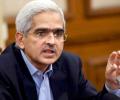
The rising COVID-19 infections across the country are a matter of concern, but it may not impact the ongoing economic revival as one does not foresee lockdowns, Reserve Bank Governor Shaktikanta Das said on Thursday. The economic revival will continue "unabated", Das said, asserting that there is no need for a downward revision of RBI's 10.5 per cent GDP growth forecast for FY22. Speaking at Times Network's India Economic Conclave, Das said, "We have 'insurance' to protect economic revival like a fast-paced vaccination drive, greater ability among people to follow COVID protocols", and one does not see lockdowns as well.

This is its lowest level since August 30
After rising for two days, gold prices went down by Rs 100 to Rs 26,850 per 10 grams at the bullion market on Tuesday, tracking a weak global trend amid slackened demand from jewellers.
Hero MotoCorp, Bajaj Auto, M&M and Tata Motors were the major winners.

Rising for the second session, the Indian rupee on Thursday climbed by 50 paise to nearly four-week high of 62.67 against the greenback on persistent selling of dollars by banks and hopes of capital inflows in view of a strong equity market.
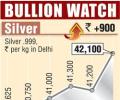
Silver also saw a hefty rise of Rs 900 to Rs 42,100 per kg on increased offtake by industrial units and coin makers.
